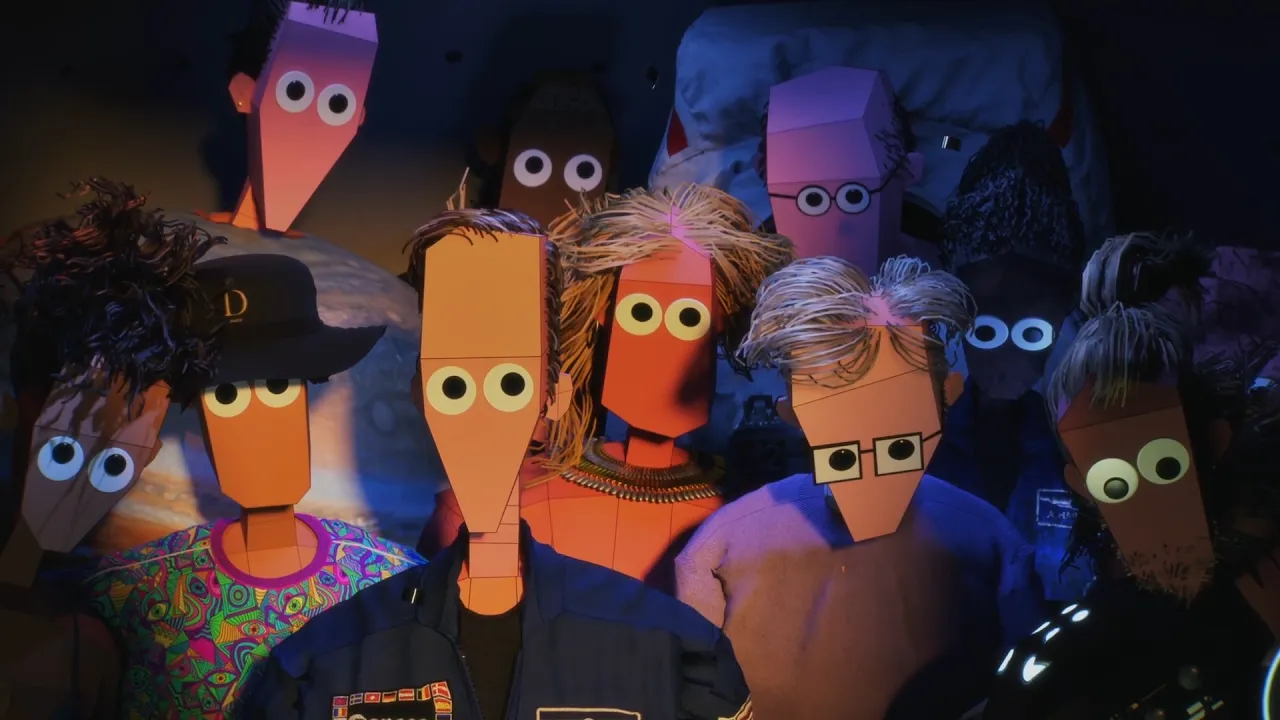
SpaceDan follows a billionaire whose birthday party aboard his private space station goes wrong, bringing the characters back to simpler, more human gestures. Five of us made the film over ten months, with fourteen characters on screen.
We built our workflow around Unreal Engine, learning as we went: neither Blender nor Unreal was taught at our school, and its production pipeline did not fit our tools.
We kept the raw look of a 3D viewport: blocky characters, visible construction lines, no mouths or eyebrows. Simpler rigs meant relying on movement, framing, music and staging to convey emotion.
As co-director, I worked on character design, clothing in Marvelous Designer and compositing, and coordinated external collaborators. I set up Kitsu on a repurposed computer, accessible through Tailscale, and later introduced Gitea with the school for version control.
To avoid repeated clothing exports whenever shots changed, we tested uDraper and secured five extended licences from triMirror for seven months. Simulating directly in Unreal kept the layout flexible.
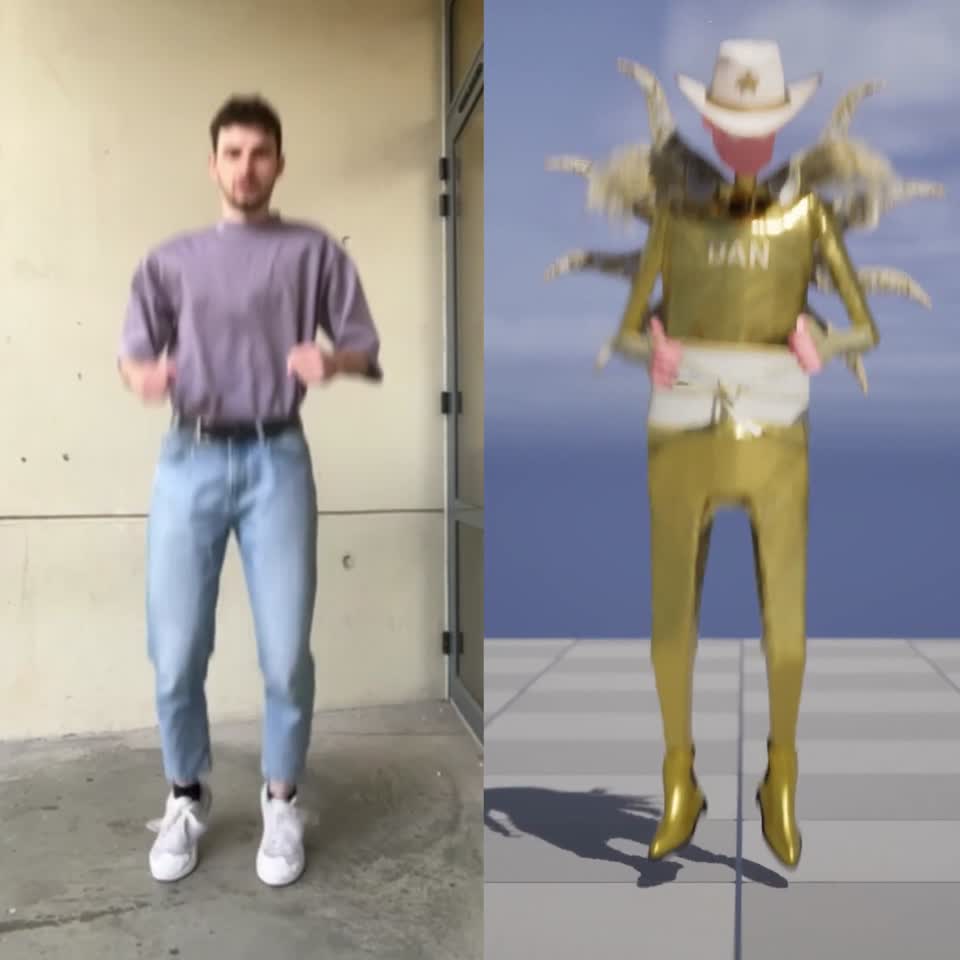
For animation, I set up Move.ai capture with an iPhone and a high-contrast suit. Sitting on a low table with my feet suspended helped capture zero-gravity movements. Our Unreal setup combined Move.ai, Blender and Mixamo animation, with most effects created in Niagara or animated textures.
The aim was to spend less time moving between tools and more time making the film.